


Enter our Virtual Gallery of Alexandrite Mineral Specimens and Alexandrite Crystals
MINERALMINERS.COM®- Your Personal 'Link' Direct to the Alexandrite Mines!TM
Links To Alexandrite Information Topics On This Page:
Chrysoberyl (BeAl2O4) is a rare oxide mineral. It most often occurs in shades of yellow to green to brown.
There are two very rare varieties of chrysoberyl,
the color change chrysoberyl variety known as alexandrite and the chatoyant cymophane
(cats eye chrysoberyl), which are highly prized as
gemstones owing to their unique optical properties.
Return to the Index of Alexandrite Information Topics
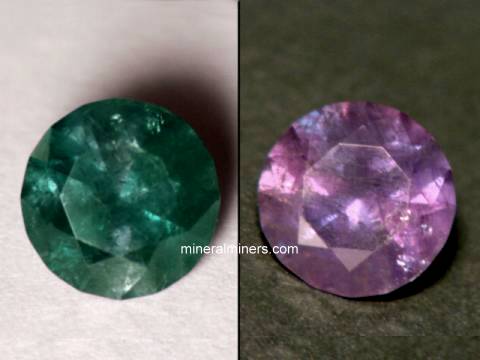
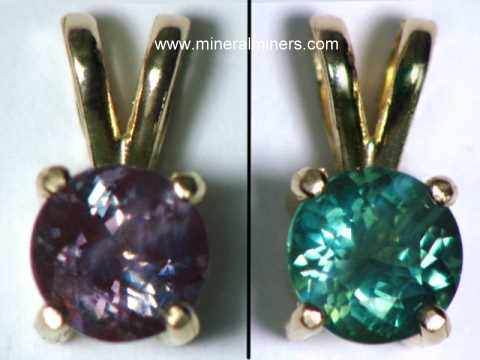
Alexandrite is a very rare mineral variety of chrysoberyl (BeAl2O4), which occurs in granitic pegmatites and mica schists. Small scale replacement in chrysoberyl of alumina by chromic oxide results in the formation of the variety alexandrite and is responsible for alexandrite's characteristic green to red color change.

Alexandrite is characterized by its high hardness and specific
gravity and its
color change in daylight versus incandescent light. Some well
formed crystals can be recognized as chrysoberyl by their characteristic twinning.
Return to the Index of Alexandrite Information Topics
Alexandrite was first discovered in 1831 in an emerald mining region of the Ural Mountains in the Soviet Union. It is said to have been first discovered on the day that the Russian czar Alexander II came of age. Thus it was named "alexandrite" in his honor by the mineralogist Nordenskjold. It is an interesting coincidence that the Russian national colors are green and red.
Alexandrite is used as a gemstone. Faceted alexandrite gems with good color change are considered very valuable, even when visible inclusions are present.
The astrological sign of alexandrite is scorpio.
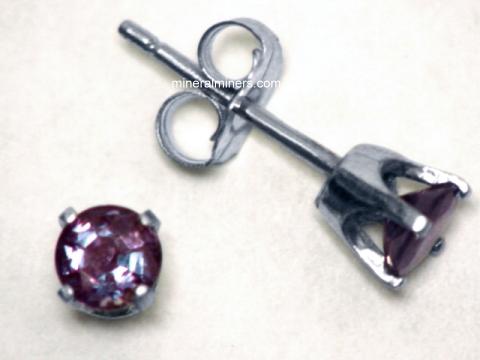
The traditional birthstone gift for the month of June is natural alexandrite earrings or jewelry.
Natural alexandrite is the symbolic gemstone for the 45th
wedding anniversary.
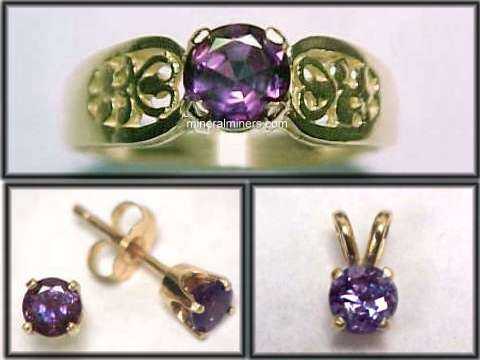
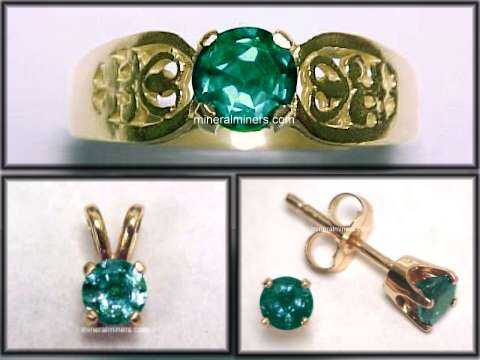 Wearing a natural alexandrite necklace or other natural alexandrite jewelry is said to help balance one's emotional state, to
provide confidence, to increase self-esteem and to help bring
about change. Using natural alexandrite jewelry such as alexandrite rings or alexandrite earrings is also said
to bring happiness and success, and to intensify feelings of
love and sensuality. Holding a raw alexandrite is said to have the same effects.
Wearing a natural alexandrite necklace or other natural alexandrite jewelry is said to help balance one's emotional state, to
provide confidence, to increase self-esteem and to help bring
about change. Using natural alexandrite jewelry such as alexandrite rings or alexandrite earrings is also said
to bring happiness and success, and to intensify feelings of
love and sensuality. Holding a raw alexandrite is said to have the same effects.
Alexandrite is said to be usefull to help treat pancreatic disorders, swollen lymph nodes and ailments of the spleen, as well as in the treatment of afflictions occurring with leukemia.
For more in-depth metaphysical information, see our Metaphysical Books section.
This is the end of our Alexandrite Factsheet and Information page.
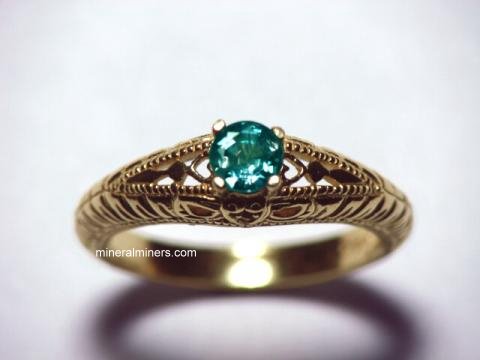
Each of our alexandrite jewelry designs is a hand crafted design. We have a variety of genuine alexandrite jewelry designs available:
Go up to the Top of this alexandrite information page